Home / Our Blog / Sea Freight vs Air Freight: Choosing the Right Mode for Your Export

Sea Freight vs Air Freight: Choosing the Right Mode for Your Export

Sea Freight vs Air Freight: Choosing the Right Mode for Your Export

The Core Trade-off

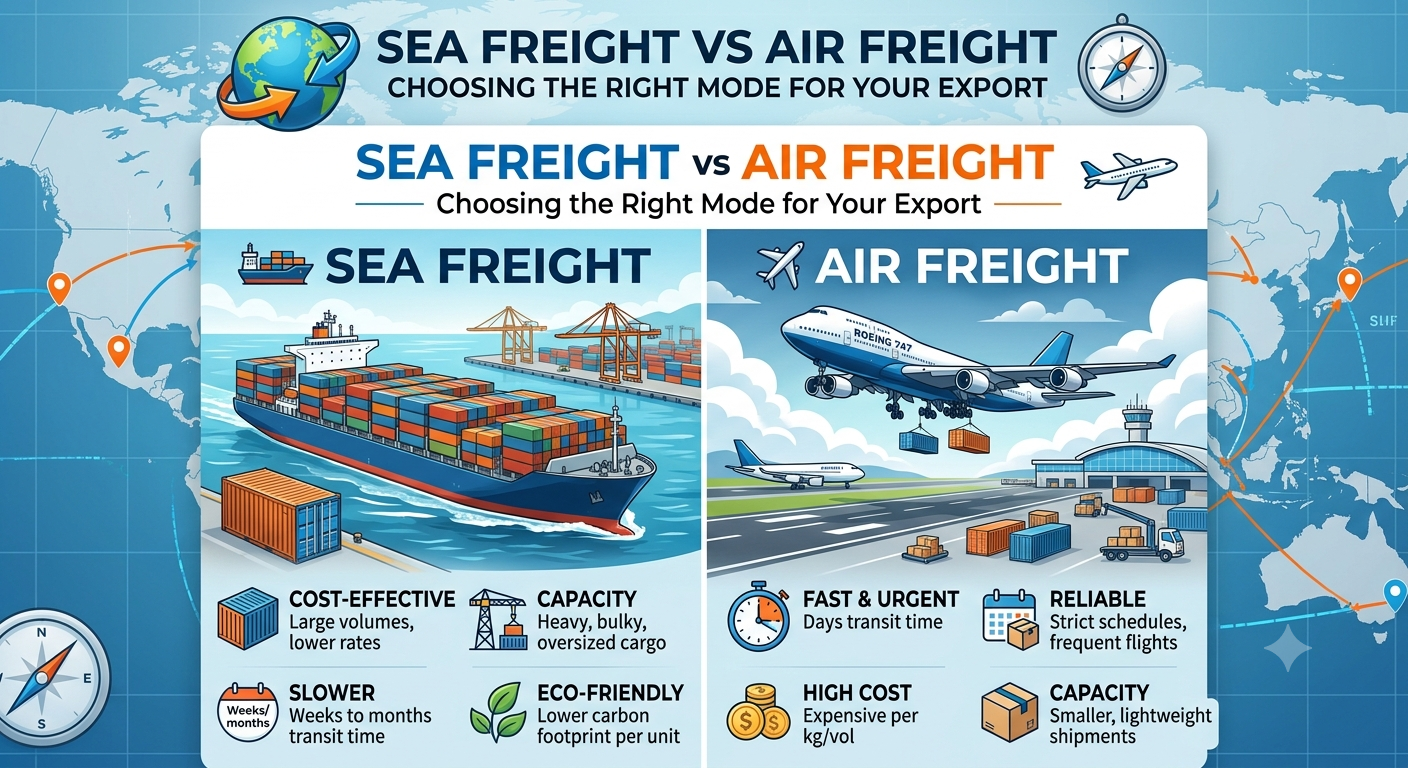
Sea freight is slower but significantly cheaper per unit of volume; air freight is faster but costs considerably more. For most exporters, the decision comes down to balancing shipment value, urgency, and cargo characteristics.

When Sea Freight Makes Sense

  • Bulk or heavy cargo where cost-per-kg matters more than speed.
  • Non-perishable goods with flexible delivery timelines.
  • Full container load (FCL) or less-than-container load (LCL) shipments where volume discounts apply.

When Air Freight Makes Sense

  • High-value, low-weight goods (electronics, pharmaceuticals, certain textiles) where the cost premium is a small fraction of product value.
  • Perishable goods with a short shelf life.
  • Urgent orders where a customer deadline outweighs the cost difference.

Factoring in Total Landed Cost

Freight cost is only part of the picture - factor in insurance, customs clearance time, and the cost of capital tied up in transit (sea freight can take weeks longer, during which payment may still be pending). For some high-turnover businesses, the faster cash conversion cycle of air freight can offset its higher direct cost.

A Simple Rule of Thumb

If your product's value-to-weight ratio is high and timelines are tight, lean air. If it's bulky, heavy, or time-flexible, sea freight is almost always the more economical choice.


Previous Post How B2B Marketplaces Are Changing Global Trade Next Post Packaging Standards for International Shipping: A Practical Guide